

Excessive grinding heat is the quiet killer of both parts and tools. It shows up as burn marks, micro-cracks, softening of hardened surfaces and a sudden drop in wheel life. The good news is that almost all of it is manageable with six practical steps that any shop can apply today.
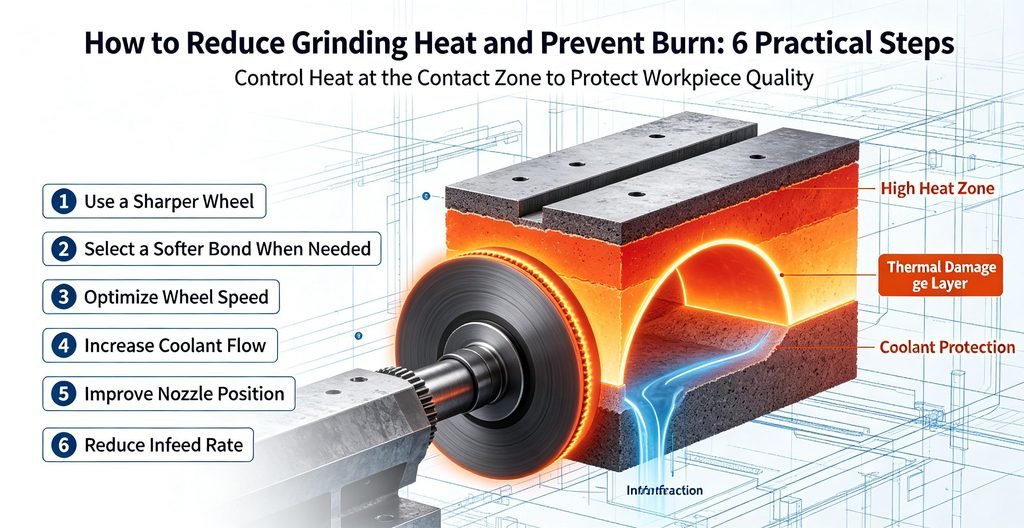
1. Keep the wheel sharp to control grinding heat
A glazed wheel rubs instead of cutting, and rubbing converts almost all of its energy into heat. Dress on a schedule, not only when the finish has already gone bad. A sharp wheel cuts cool; a dull wheel burns parts.
2. Get the coolant to the contact zone
Coolant only helps where it actually reaches the grind zone. Aim the nozzle at the point of contact, not at the top of the wheel, and keep flow and pressure adequate. Dirty coolant recirculates fines that polish the wheel rather than cool the part, which raises heat.
3. Reduce the depth of cut per pass
Heat rises sharply with depth of cut. Several lighter passes usually finish cooler and faster overall than one heavy pass, because the wheel stays sharp and the part never gets hot enough to burn. This is the single most effective parameter change in most shops.
4. Match the bond and grit to the job
A bond that is too hard for the material glazes and burns. A grit that is too fine for the stock removal asked of it rubs. If you burn parts despite correct speeds and coolant, the bond is the prime suspect. See our resin vs metal bond comparison for guidance.
5. Do not let the wheel dwell
Dwelling — holding the wheel in one spot — concentrates heat exactly where it does the most damage. Keep a steady traverse and let the wheel cut. On CNC machines, avoid pauses at direction changes wherever the geometry allows.
6. Control speed within the wheel’s range
Every wheel has a working surface speed. Too slow and the grain rubs; too fast and friction climbs. Stay inside the supplier’s range and adjust for the material rather than pushing the machine to its limit. The physics is the same as conventional grinding, covered in Wikipedia’s article on grinding.
Why grinding heat matters beyond appearance
Burn is not cosmetic. In hardened steel it means a softened, tempered zone that will fail in service; in carbide it can mean micro-cracking that shortens tool life dramatically. Controlling grinding heat protects the part’s function, not just its look, and it also keeps wheel life stable, as covered in our tool life guide.
Preventing grinding heat starts with the right wheel
The quickest way to cut cool is to start with a wheel matched to the material. If you are choosing between abrasive types, our diamond vs CBN grinding wheels guide covers when each abrasive is right, and our selection guide covers bond, grit and concentration.
FAQ
Is more coolant always better?
No. Delivering coolant to the correct place at the correct pressure matters far more than raw volume.
Can I grind hardened steel without burning?
Yes, with a sharp vitrified or CBN wheel, light passes and good coolant. CBN tolerates heat better than diamond on steel.
How often should I dress?
Start from the supplier’s recommendation and shorten the interval if you see glazing, chatter or rising temperatures.
Stop burning parts
Tell us what you are grinding and we will recommend a wheel, bond and parameters that cut cool. Browse the catalogue or contact our engineers.